01 — Connection
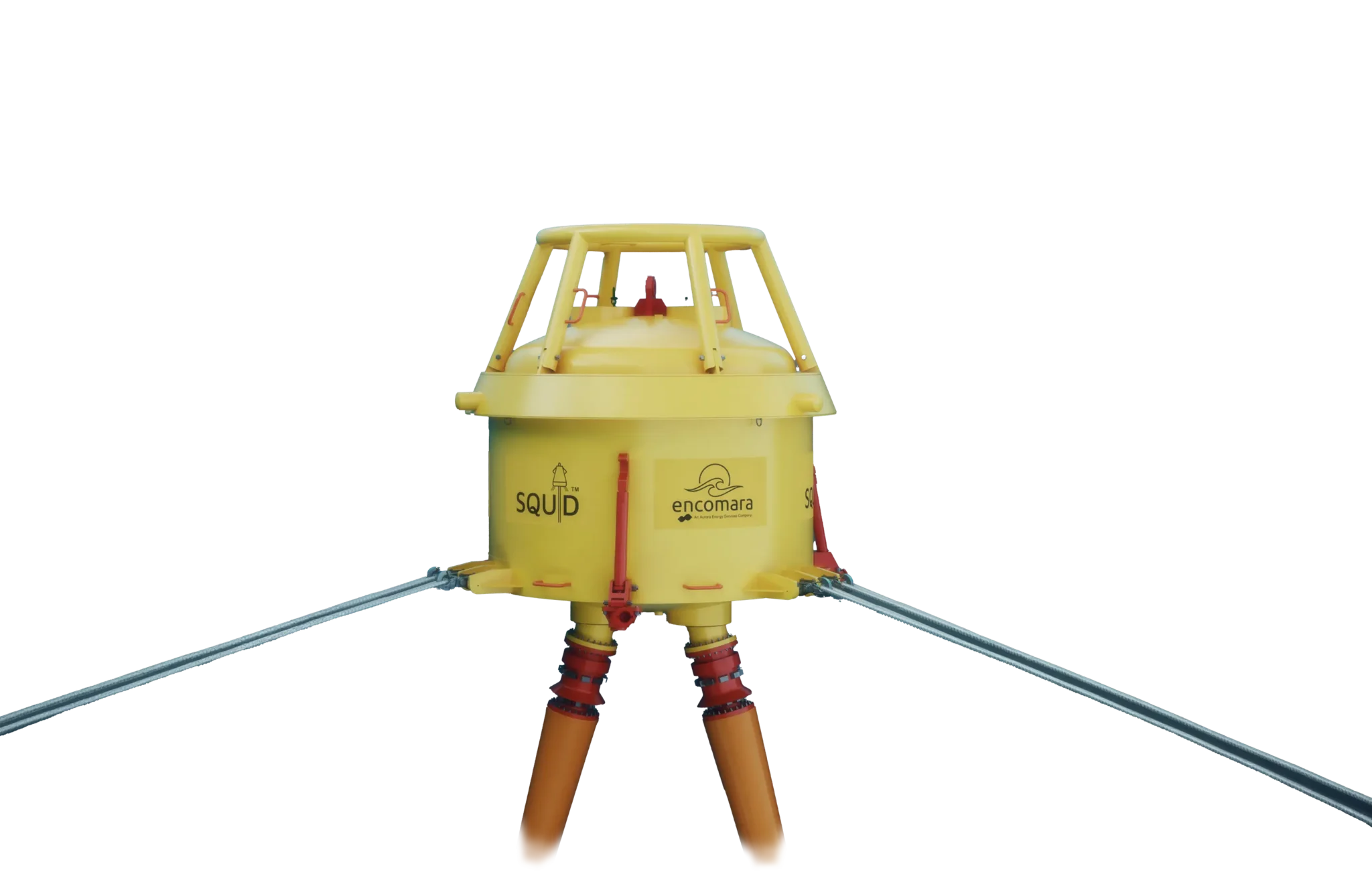
Squid™ is a connection system for Floating Wind.
It supports mooring lines, power cables and all connectors off the seabed, enabling rapid hook-up and disconnection of Floating Offshore Wind Turbines (FOWTs).


Technologies · Squid™

SCROLL TO DIVE ↓
Meet Squid™
A subsea connection system for floating offshore wind.
What is Squid™?
Squid™ is Encomara's patented floating offshore wind connection system, engineered to remove one of the industry's biggest installation bottlenecks.
It enables the pre-installation of critical subsea infrastructure before the floating offshore wind turbine arrives on site.
Downloads
Squid™ brochure
PDF ↓
Technical overview
PDF ↓
Validation documents — ABS
PDF ↓
Quick facts
Technology Readiness Level (TRL) 7–8
ABS Product Design Assessment (PDA) Approved
Patent Protected
Commercially Scalable
Enables Tow-to-Port (T2P) strategies
Hull / Cable / Mooring Agnostic
Reduces LCOE by up to 20%
Saving £1Bn / GW over life of field
Squid™ in three statements
01 — Connection
It supports mooring lines, power cables and all connectors off the seabed, enabling rapid hook-up and disconnection of Floating Offshore Wind Turbines (FOWTs).
02 — Cost
It enables full pre-installation of critical-path infrastructure, reducing vessel costs, accelerating first power and lowering LCOE by up to 20% across life of field.
03 — Risk
By keeping connectors off the seabed, it reduces damage to infrastructure, enables a viable Tow-to-Port (T2P) strategy, and improves project integrity and insurability.
What Squid™ is — and isn't
Not a new floater. Not a new mooring system. The connection that lets you install both before the turbine arrives.
Squid™ is
Squid™ isn't
Squid™ FAQ
Straight answers.
What does Squid™ connect?
Mooring lines, power cables and their connectors. Squid™ gathers them at a single point and holds them off the seabed, ready for the turbine.
When is it installed?
Before the turbine arrives. Moorings, cables and Squid™ are pre-installed and pre-commissioned, then Squid™ waits in wet storage until hook-up.
How is the turbine connected?
When the floating turbine arrives on site, Squid™ is pulled in and connected to it, bringing the moorings and power connection across in one operation.
Will it work with our floater?
Squid™ is hull, cable and mooring agnostic. It is designed to work with the floating foundation and mooring design your project has already chosen.
Does it support Tow-to-Port?
Yes. Rapid disconnection leaves moorings and cables safely held on Squid™ while the turbine is towed to port for major maintenance, then reconnected on its return.
How mature is the technology?
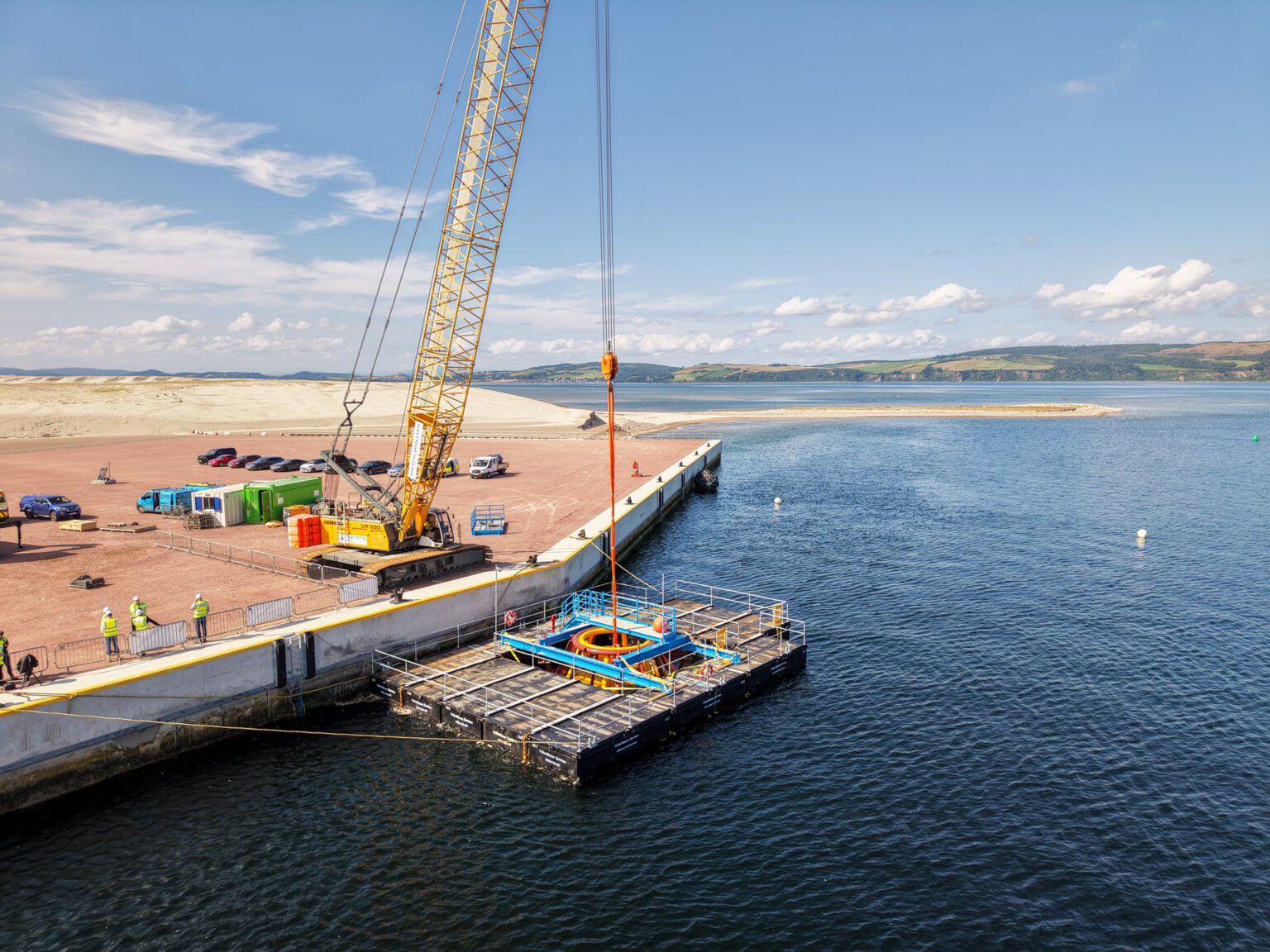
Squid™ holds ABS Product Design Assessment (PDA) approval and has completed full-scale inshore wet trials at Ardersier. It sits at Technology Readiness Level 7–8.
TRL 7
System prototype demonstrated in an operational environment.
TRL 8
Complete system qualified and ready for first deployment.
TRL 9 · Next
System proven in operation on a commercial floating wind project.
Installation sequence
From wet storage to first power, in four steps.
01
Squid™ in wet storage
Moorings, power cable and Squid™ are pre-installed and pre-commissioned. Squid™ waits mid-water, clear of the seabed, with enough slack in the lines for a vertical pull-in.
02
The turbine arrives
The floating turbine is towed to site. No mooring or cable work sits on the critical path, because everything it needs is already waiting below.
03
Pull in Squid™
Squid™ and cables are pulled up to the floater, now ready to recover mooring lines.
04
Moorings connected
Squid™ locked, moorings and cables connected – ready for first power.
Schematic · not to scale
The engineering journey behind Squid™
From challenge to connection.
The challenge
Floating wind needs a new installation strategy. Traditional methods connect moorings and power cables after the turbine arrives on site — creating dependence on long weather windows and complex offshore operations.
The opportunity
What if all subsea infrastructure could be installed before the turbine arrives? Pre-installing cables removes key activities from the critical path — faster deployment, earlier first power, improved project economics.
The Solution: Squid™
Squid™ enables mooring lines, power cables and associated connectors to be installed and protected before the floating wind turbine arrives on site — simplifying offshore operations and supporting efficient Tow-to-Port throughout the asset lifecycle.
01 — THE CHALLENGE
Why choose Squid™
Engineered to deliver better outcomes.
01
Safer operations
Reduce high-risk offshore activities by minimising personnel exposure during connection and disconnection. Pre-installed infrastructure means fewer deck operations and less vessel interaction around floating assets.
02
Faster deployment
Accelerate deployment through pre-installation and pre-commissioning of critical infrastructure. Reduced weather dependency and simplified offshore operations enable quicker hook-up, shorter schedules and earlier first power.
03
Lower project costs
Reduce vessel days, fuel consumption and project duration through a more efficient installation methodology. Improved operability eases pressure on vessel availability and contributes to meaningful reductions in LCOE.
04
Earlier first power
Deliver revenue sooner by accelerating turbine hook-up and reducing installation delays. Faster execution enables assets to begin generating electricity earlier, improving project economics and return on investment.
05
Greater asset integrity
Protect critical subsea infrastructure by supporting cables and connectors off the seabed, reducing damage potential during installation and operation. Squid™ also supports Tow-to-Port strategies and system continuity.
06
Reduced environmental impact
Fewer vessel days, lower fuel consumption and reduced offshore activity minimise emissions, underwater noise and disturbance to the marine environment — with less seabed intervention during project delivery.
Tow-to-Port (T2P)
Disconnect. Tow to port. Reconnect.
Major repairs on a floating turbine don't have to happen offshore. Squid™ makes Tow-to-Port a practical strategy for the whole life of the asset.
The turbine disconnects quickly and leaves moorings and power cable safely held off the seabed on Squid™. It is towed to sheltered water, where quayside cranes and calmer conditions replace heavy-lift vessels and long weather windows, then brought back and reconnected.
01
Disconnect at sea
Moorings and cable stay on Squid™, protected and ready, with nothing laid on the seabed.
02
Maintain in port
Major component work happens quayside, with less vessel time and less exposure for people offshore.
03
Reconnect and restart
Back on site, the turbine is pulled in and reconnected to the waiting Squid™, and generation resumes.
Squid™ animation
How Squid™ connects a floating turbine.
To see the full animation, contact our team.
View Ardersier wet trial